
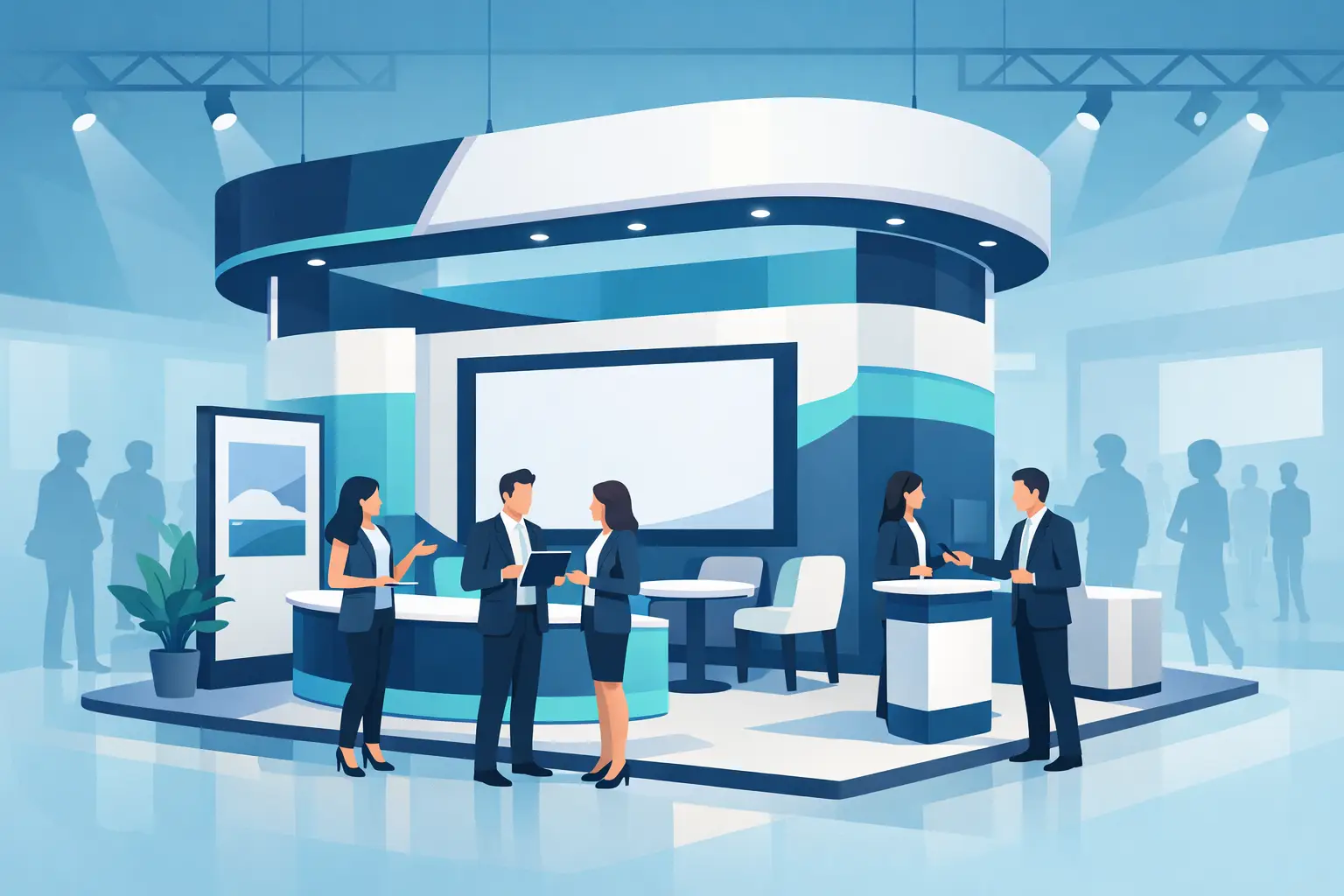

Trade show floors are crowded, noisy, and expensive. If your team is investing in an event, custom exhibition booth design should do more than look impressive for a few hours – it should support conversations, guide traffic, and make your brand easier to remember once the show ends.
For procurement teams, marketers, and event managers, that means treating the booth as a business asset rather than a backdrop. A good booth helps sales teams work efficiently, keeps messaging consistent across printed materials and branded giveaways, and gives visitors a clear reason to stop. A poor booth creates friction – cluttered space, weak visibility, mixed branding, and missed opportunities.
What custom exhibition booth design actually needs to do
The most effective booths are built around function first. Appearance matters, but a booth that looks polished and fails operationally will still underperform. Before colors, finishes, or display features are discussed, the real question is how the space needs to work.
Some exhibitors need a layout that supports high visitor volume and short conversations. Others need quieter space for product demos, meetings, or lead qualification. A company launching a new service may need large-format messaging with strong visual hierarchy, while a business with a broad catalog may need zones for multiple product categories. The right answer depends on event goals, audience behavior, booth size, and staffing.
This is where custom exhibition booth design offers real value over a generic display. It allows the structure, branding, graphics, and accessories to reflect the way your team sells. Instead of adapting your process to fit a standard setup, the booth is planned around your process.
Why generic booths often cost more than they save
At first glance, standard modular booths can appear more budget-friendly. In some cases, they are. If you are attending a small event with minimal competition and only need a basic presence, a simpler setup may be enough.
But many businesses underestimate the hidden cost of a booth that does not fit the job. If the graphics are hard to read from a distance, if there is nowhere to store collateral, if staff are standing in a cramped area, or if the setup does not reflect the quality of your brand, the return on event spend drops quickly. You are still paying for floor space, logistics, staffing, and promotional items. A weak booth can reduce the value of all of those investments.
Custom does not always mean oversized or excessive. Often it means making better use of the footprint you already paid for. Better sightlines, cleaner messaging, branded counters, integrated shelving, digital display placement, and coordinated printed materials can all improve performance without forcing a dramatic increase in cost.
Key elements of custom exhibition booth design
A high-performing booth usually gets a few fundamentals right. The first is visibility. Attendees should be able to identify your brand and offer quickly, even while walking past at a distance. That usually means concise headlines, strong brand colors, and graphics designed for viewing in seconds rather than minutes.
The second is flow. Visitors need an easy path into the booth, and staff need enough room to engage without blocking entrances. This sounds basic, but many booths fail here. Overfurnished layouts and badly placed counters can make a booth feel closed before anyone even walks in.
The third is consistency. If the booth graphics say one thing, the brochures say another, and the giveaways feel unrelated, the overall brand impression weakens. Businesses get better results when booth structures, wall visuals, printed handouts, and promotional merchandise are planned as one system.
Storage is another feature that matters more than many buyers expect. Boxes, samples, personal bags, extra flyers, and technical items need to go somewhere. If they end up visible on the booth floor, presentation suffers immediately.
Lighting, material finish, and display accessories also affect the final result, but they should support the main goal rather than compete with it. Bright lights and premium finishes can enhance perception, but they cannot fix a weak layout or unclear message.
Custom exhibition booth design and brand consistency
For companies managing multiple vendors, brand consistency is often the first thing to slip. One supplier handles the booth graphics, another prints the brochures, another sources branded giveaways, and the final event presence feels pieced together.
That is why many organizations prefer working with one supplier that can support exhibition materials alongside printing and promotional products. It reduces back-and-forth, shortens approval cycles, and lowers the risk of color mismatches, inconsistent logo use, or late-stage changes getting lost between vendors.
When the booth, handouts, counters, backdrops, and giveaway items are aligned, the visitor experience feels more professional. That matters in B2B environments where trust, reliability, and presentation influence buying decisions. It also makes life easier internally for the teams responsible for approvals, budgeting, and execution.
How to plan a booth around business goals
The strongest booth concepts usually start with three practical questions. What do you want attendees to do? What does your team need in order to make that happen? And what will success look like after the event?
If lead generation is the main goal, the booth should prioritize visibility, approachability, and quick conversations. If the event is about relationship building, a more structured meeting area may matter. If you are showcasing physical products, product display and sample handling become central. If you are promoting services, your graphics and messaging need to carry more of the load.
It also helps to be realistic about event conditions. A booth that works well in a large industry expo may not suit a university fair, internal corporate event, or premium business conference. Ceiling heights, venue regulations, installation windows, and visitor traffic all affect what is practical.
This is also where budget decisions become clearer. Instead of asking for the biggest possible booth within budget, ask which features directly support your goals. That approach usually leads to better spending. You may find that branded counters, a clean back wall, organized product display, and coordinated print materials create more value than decorative extras.
Common mistakes that reduce booth performance
One of the most common mistakes is trying to say too much. Businesses often load booth graphics with paragraphs, product lists, and technical details that no one will read while walking by. The booth should create interest and start the conversation, not replace it.
Another issue is poor staffing fit. Even well-designed booths underperform when too many people are packed into a small footprint or when there is no defined space for greeting, demoing, or meeting. Booth design and staffing strategy should be planned together.
A third mistake is separating the booth from the rest of the event toolkit. If you are distributing branded bags, notebooks, lanyards, flyers, or presentation folders, these items should feel connected to the booth visually and strategically. They extend your presence beyond the stand itself.
Finally, deadlines are often left too late. Booth production, approvals, print runs, and branded accessories all need lead time. Last-minute execution usually reduces options and increases stress.
Choosing the right booth partner
When evaluating suppliers, design capability matters, but so does operational coverage. A visually strong concept is only useful if it can be produced accurately, delivered on time, and supported with the surrounding materials your event requires.
For many buyers, the advantage of a full-service supplier is simplicity. Instead of coordinating separate teams for booth production, graphics, event printing, and branded merchandise, you can align the project under one workflow. That saves time and helps maintain quality control.
If your business exhibits regularly, it is also worth thinking beyond a single event. A well-planned booth system can often be adapted for different venues, campaigns, and booth sizes. That makes future events easier to manage and can improve long-term value.
For companies that want a more coordinated event presence, The Wrapperz supports custom booth requirements alongside branded merchandise, printing, and display materials through one sourcing partner at https://thewrapperz.com.
What a strong booth really delivers
The real measure of custom exhibition booth design is not whether people compliment the stand. It is whether your team can use the space effectively, whether the brand looks consistent and credible, and whether the booth supports measurable event outcomes.
A practical, well-branded booth helps visitors understand who you are faster. It gives staff a better environment to work in. It makes your print materials and promotional items feel intentional rather than added at the last minute. And it gives your event budget a better chance of producing results that continue after the show floor clears.
If you are planning for an upcoming event, start with the business objective and build the booth around that. The design choices become much easier when the space is expected to perform, not just appear.