
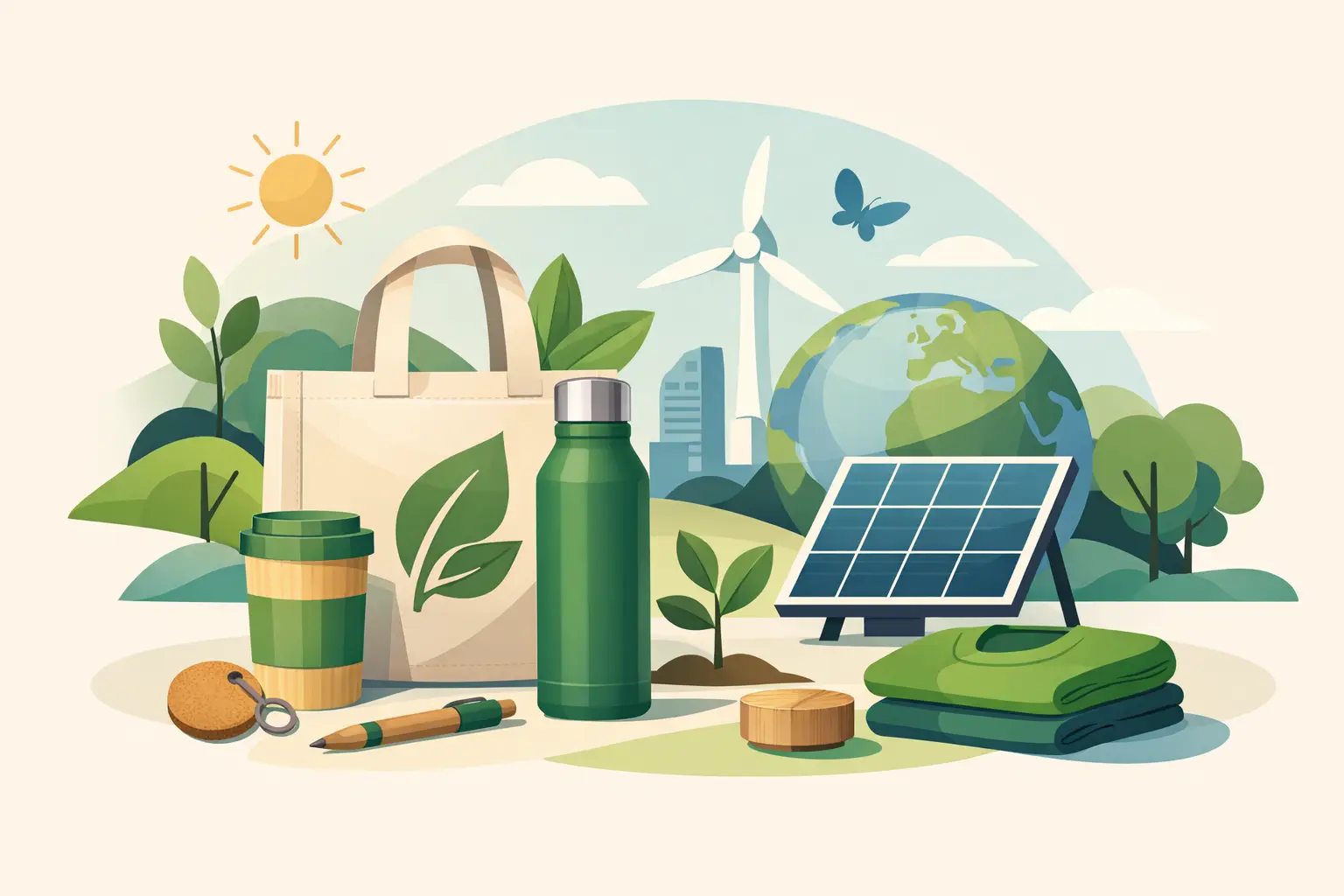

A recycled notebook with a weak cover gets tossed. A stainless bottle that fits a daily routine stays on a desk for years. That gap is what makes eco promotional products trends worth watching right now. Buyers are moving past the idea of “green” as a label and looking harder at usefulness, material quality, presentation, and how each item performs in real business settings.
For procurement teams, marketers, HR managers, and event planners, the shift is practical. You still need branded products that meet budget, arrive on schedule, and represent the company well. The difference is that more campaigns now require products that support sustainability goals without feeling cheap, vague, or purely symbolic.
Why eco promotional products trends are changing buyer priorities
The biggest change is simple: buyers are asking better questions. Instead of choosing an item just because it uses bamboo or recycled paper, they want to know whether people will actually keep it, whether branding will look professional, and whether the product fits the audience.
That matters because sustainability and waste reduction are not exactly the same thing. A reusable item only delivers value if recipients use it repeatedly. A low-cost giveaway made from a better material may still be a poor choice if it has no daily purpose. In many campaigns, fewer high-utility items create stronger brand value than a large volume of disposable giveaways.
This is also changing how companies plan merchandise across departments. Marketing teams want event-ready products. HR wants welcome kits and employee gifts. Procurement wants fewer vendors and more consistency. Eco-focused sourcing works better when those needs are handled together instead of as separate purchases.
Utility is beating novelty
One of the clearest eco promotional products trends is the move toward practical categories. Drinkware, notebooks, tote bags, lunch containers, tech accessories, and everyday desk items continue to perform because they fit existing routines. When a product becomes part of work, commuting, travel, or meetings, the brand stays visible without forcing attention.
That does not mean novelty is gone. It means novelty has to earn its place. A creative eco-themed giveaway can still work for launches or exhibitions, but buyers are becoming more selective. If an item looks interesting for one day and disappears by the next week, it is harder to justify at volume.
This is why well-designed bottles, reusable cups, recycled stationery sets, and durable bags remain strong choices. They are familiar, easy to customize, and suitable for corporate gifting, employee onboarding, conferences, and client meetings.
Better materials matter, but so does product construction
Material selection is still a major buying factor, but the conversation is broader now. Recycled PET, recycled paper, cork, wheat straw blends, bamboo accents, organic cotton, and stainless steel all have market appeal. Still, business buyers are learning that material alone does not guarantee a better product.
Construction quality matters just as much. A recycled tote with reinforced handles will outperform a thinner alternative. A bottle with a reliable lid and clean print area will generate better results than one chosen only for its eco claim. In branded merchandise, perceived quality affects both brand perception and retention.
For that reason, many buyers are requesting samples before committing to larger orders. This is especially relevant for gifting programs and event kits where packaging, print finish, and consistency across items need to align.
Minimal packaging is becoming part of the product decision
Packaging used to be an afterthought for many promotional orders. Now it is part of the conversation. Companies want to reduce excess packaging, especially for event giveaways, employee kits, and bulk distribution.
This does not mean presentation should be stripped down. It means packaging should be intentional. Kraft boxes, recyclable sleeves, simple paper wraps, and compact packing formats often support the product better than layered plastic-heavy presentation. For premium gifts, the goal is a clean branded look that feels considered rather than overbuilt.
There is a trade-off here. More minimal packaging can reduce waste and shipping volume, but some campaigns still need a stronger unboxing experience. Client gifts, executive sets, and milestone awards may justify more structured presentation. The right balance depends on audience, budget, and occasion.
Customization is getting more restrained and more strategic
Another of the key eco promotional products trends is how branding is applied. Large loud logos are not always the best fit, especially on premium reusable products. Many companies are choosing cleaner branding treatments, smaller logo placements, tone-on-tone printing, and designs that make the item feel more retail-ready.
That shift is not only aesthetic. It improves the chance that recipients will continue using the product in public or at work. A sleek tumbler or tote with subtle branding often has a longer usable life than a heavily branded version.
For corporate buyers, this is where supplier capability matters. Some products perform best with screen printing, while others need engraving, UV printing, embossing, heat transfer, or full-wrap decoration. The branding method should match both the product surface and the intended impression. A good eco item can lose impact if customization looks rushed or wears off quickly.
Sets and kits are replacing one-off giveaways
Many organizations are moving from single items to coordinated kits. This trend works particularly well for onboarding, conference packs, training sessions, internal campaigns, and client appreciation.
A recycled notebook, pen, bottle, and tote presented as a branded set usually feels more complete than four unrelated products sourced separately. It also helps with consistency across color, logo placement, and overall presentation. For busy teams, that reduces approval time and simplifies ordering.
Kits also support different budget levels. A company can build a basic event pack for high-volume distribution or a more premium employee welcome set with upgraded materials and packaging. The key is not adding products just to fill a box. Every item should serve a purpose.
Event merchandise is shifting toward useful takeaways
Exhibitions and conferences are still major drivers of promotional product demand, but attendee expectations are changing. People walk away from booths with too much disposable material and too many forgettable handouts. Useful branded items stand out more than ever.
For exhibitors, eco-focused products work best when they connect to the event environment. Reusable water bottles, notebooks for session notes, badge holders with reuse potential, tote bags for event materials, and compact tech accessories all make sense in that setting. They solve an immediate need while continuing to promote the brand after the event ends.
There is also an operational advantage in working across merchandise, printed collateral, and booth materials together. Brand consistency improves when product selection, graphics, and event presentation are planned as one package rather than split across multiple suppliers.
Buyers want proof, not vague claims
Sustainability language is under more scrutiny now. Buyers are less willing to accept broad eco messaging without clear supporting details. They want to know what the product is made from, how it is packed, what customization options are available, and whether the item is practical enough to justify the spend.
This does not mean every promotional product needs a long technical explanation. It means product descriptions and sales conversations should be specific. Recycled content, reusable design, packaging approach, and expected use case are all more persuasive than generic eco language.
The same applies internally. Procurement teams often need to justify product choices to marketing, finance, or leadership. Products with a clear utility story are easier to approve than items chosen only to align with a trend.
Price sensitivity is still real
Budget pressure has not gone away. Eco products are in demand, but buyers still compare unit cost, setup fees, shipping impact, and lead times. That is why the strongest programs are not necessarily the most premium. They are the ones that align product quality with campaign goals.
Sometimes that means selecting one standout item instead of several low-cost fillers. Sometimes it means using eco stationery for a large seminar and reserving premium drinkware for VIP gifting. In other cases, it means simplifying packaging to protect the overall budget while keeping the product quality high.
There is no single right mix. Volume, audience type, event format, and brand positioning all influence what makes sense. A strong supplier should help narrow those choices based on application, not just catalog category.
What businesses should do next
The best response to these trends is not chasing every new material or product launch. It is building a smarter merchandise plan. Start with audience and use case. Then choose products that people will keep, branding methods that suit the item, and packaging that supports the presentation without adding waste.
For many organizations, eco promotional products trends are leading to a more disciplined buying approach overall. Better product selection, tighter branding, coordinated kits, and fewer disposable giveaways usually create better outcomes for both brand visibility and budget control. If a product is useful, well made, and customized properly, it does more than check a sustainability box. It keeps working long after the event table is cleared.