
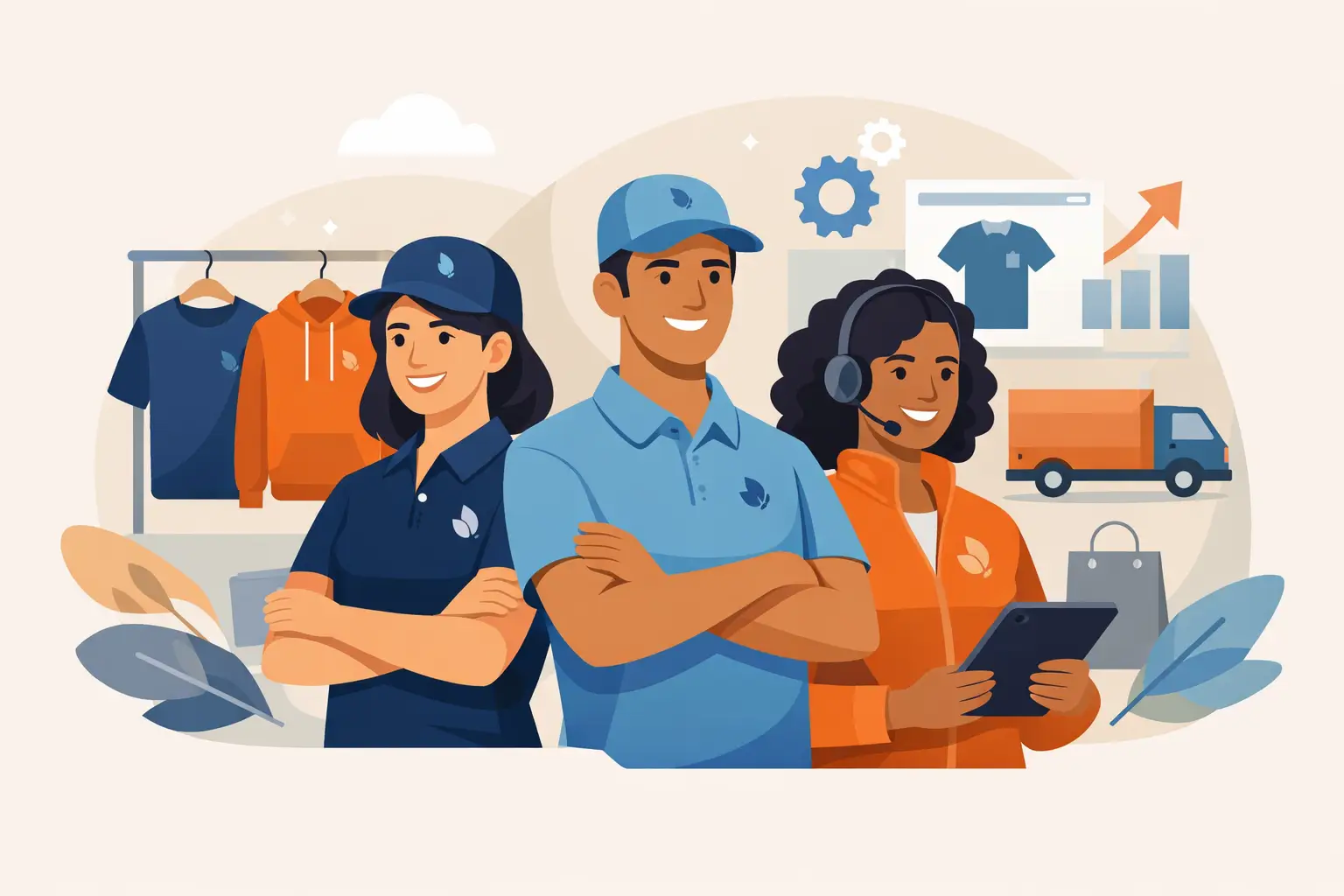

A mismatched team is easy to spot. One person is in a faded polo from three years ago, another is wearing a vendor giveaway tee, and the front-desk staff has no visible brand presence at all. For any business that cares about presentation, that inconsistency shows up fast. Custom branded apparel for staff solves that problem, but only when it is selected with the same care you would give any other brand asset.
Staff apparel is not just a logo placed on a shirt. It affects how customers recognize your team, how employees represent the business in public, and how consistent your brand looks across locations, events, departments, and client-facing roles. For procurement, HR, marketing, and operations teams, the right apparel program also reduces repeat sourcing problems and keeps reorders easier to manage.
Why custom branded apparel for staff matters
Branded apparel does several jobs at once. It creates a more professional appearance, helps customers identify staff quickly, and reinforces brand visibility in day-to-day interactions. In offices, retail spaces, hospitality settings, campuses, exhibitions, and field operations, that visibility matters because people respond to clear visual cues.
There is also an internal benefit. When apparel is well made and appropriate for the role, staff are more likely to wear it confidently. That has a direct impact on consistency. A polo that fits the environment and feels comfortable gets used. A low-quality shirt with stiff fabric or poor sizing usually ends up at the back of a drawer.
For businesses managing multiple touchpoints, apparel can support broader brand systems. The same colors, logo placement, and production quality used on uniforms can align with event backdrops, promotional giveaways, exhibition displays, printed materials, and onboarding kits. That kind of consistency is hard to achieve when different items are sourced from different vendors without coordination.
Choosing the right apparel for the job
The best apparel choice depends on who will wear it, where they will wear it, and how often. A front-desk team has different needs than warehouse staff. A trade show team has different needs than outdoor promoters. The right item is not always the cheapest or the most premium. It is the one that suits the use case.
Polos, shirts, tees, jackets, and more
Polos remain one of the most practical choices for staff branding because they strike a balance between casual and professional. They work well for customer-facing teams, retail staff, event crews, and service businesses that want a clean but approachable look.
Button-down shirts are often better for corporate environments, reception teams, or premium client-facing roles where a more formal appearance is expected. T-shirts are useful for activations, campaigns, internal events, campus outreach, and casual environments, especially when you need volume and mobility.
Outerwear deserves more attention than it usually gets. Jackets, hoodies, fleece layers, and vests are valuable when staff work outdoors, in cold venues, or across changing conditions. If your team needs to wear branded apparel regularly, seasonal practicality matters. A great-looking uniform that does not match the climate will not get used consistently.
Fabric and wearability make a real difference
Apparel quality affects brand perception. Thin fabric, poor stitching, and inconsistent color matching make branded clothing look disposable. That may be acceptable for a one-day giveaway shirt, but not for staff apparel that represents your business every week.
Breathability, stretch, wash performance, and color retention should all be considered before placing a large order. For active roles, moisture-wicking fabric may be the better option. For office wear, a cotton-rich polo or shirt may feel more appropriate. If your staff work long shifts, comfort is not a minor detail. It directly affects adoption.
Branding details that make apparel look professional
Good branding on apparel is usually controlled and deliberate. Oversized logos, awkward placement, and too many visual elements can make staff clothing feel promotional instead of professional. In most cases, cleaner branding creates a stronger result.
Left-chest logo placement is common because it is visible, familiar, and easy to standardize. Back prints may work for event teams, logistics crews, or roles where visibility from a distance matters. Sleeve branding can add a subtle secondary element, particularly when departments, campaign names, or partner branding need to be included.
Color choice matters just as much as logo choice. Black, white, navy, gray, and brand colors can all work, but the decision should reflect both the brand and the role. A dark polo may look sharper in operational settings. A lighter shirt may suit office environments better. If apparel is likely to be worn repeatedly, practical stain resistance and washability should be part of the conversation.
Printing and embroidery – what works where
Decoration method affects both appearance and durability. Embroidery is often preferred for polos, jackets, caps, and button-down shirts because it gives a more premium, structured finish. It is especially effective for company logos and names where a polished presentation is important.
Printing works well for t-shirts, campaign apparel, larger graphics, and event-driven designs. It also gives more flexibility for bold visuals, gradients, taglines, or larger artwork. The trade-off is that the finish depends heavily on fabric type, print method, and expected wear.
For many buyers, this is where supplier guidance matters. The right method depends on garment material, quantity, artwork complexity, and budget. A smart apparel program is not built by forcing one decoration method onto every item. It is built by matching the branding method to the actual use case.
Buying custom branded apparel for staff at scale
Large orders bring a different set of challenges. Sizing becomes more complex, approvals take longer, departments may want variations, and reorders need to match the original batch. This is why apparel procurement should be approached as a system rather than a one-off purchase.
Start with role segmentation. Not every team needs the same item. Reception, sales, event crews, site teams, and back-office staff may all require different apparel formats while still staying visually aligned. That allows you to maintain consistency without forcing one garment across every function.
Standardizing brand guidelines for apparel also helps. Define approved logo versions, decoration positions, garment colors, and any department-specific variations before production begins. This reduces delays and avoids internal disagreement later.
Sizing should never be treated casually. Ask for a size breakdown based on real staff data where possible. If the order is for a large team or multiple sites, sample review is worth the extra step. A correct sample can prevent an expensive production issue.
Common mistakes businesses make
One of the most common mistakes is choosing based on unit price alone. Low-cost apparel may look fine at quote stage, but if it shrinks, fades, or loses shape quickly, the replacement cost is higher than it seemed.
Another issue is over-branding. Staff apparel should support your brand presence, not make employees look like moving billboards. In many corporate settings, restraint creates a better result.
Poor planning around timing is another avoidable problem. Apparel often sits alongside events, onboarding schedules, branch openings, and campaigns. If it is ordered too late, businesses end up compromising on product choice, branding method, or delivery schedule.
There is also the issue of disconnected sourcing. When apparel comes from one vendor, event kits from another, and printed materials from a third, brand consistency usually suffers. Working with a supplier that can support merchandise, printing, and event branding together can make execution simpler, especially for businesses managing recurring campaigns or multiple physical touchpoints.
When custom apparel delivers the most value
Custom branded apparel for staff tends to deliver the best return when it is tied to a clear business function. That could be customer recognition, team presentation, event staffing, onboarding, field visibility, or stronger branch-level consistency. It works best when the apparel has a defined role rather than being ordered simply because branded clothing feels like something every company should have.
This is particularly relevant for businesses preparing for exhibitions, launches, retail activations, or internal brand rollouts. In those cases, apparel becomes part of a broader presentation system that may also include booth graphics, signage, printed collateral, giveaways, and display materials. A coordinated approach is more efficient and usually produces a stronger brand impression.
For companies that need that level of coordination, a one-stop supplier can reduce friction. The Wrapperz supports businesses that want branded merchandise, printing, and display solutions managed through a single source, which is often more practical than splitting projects across several vendors.
The right staff apparel should do more than carry a logo. It should fit the job, hold up in real use, and make your brand look organized every time your team shows up.