
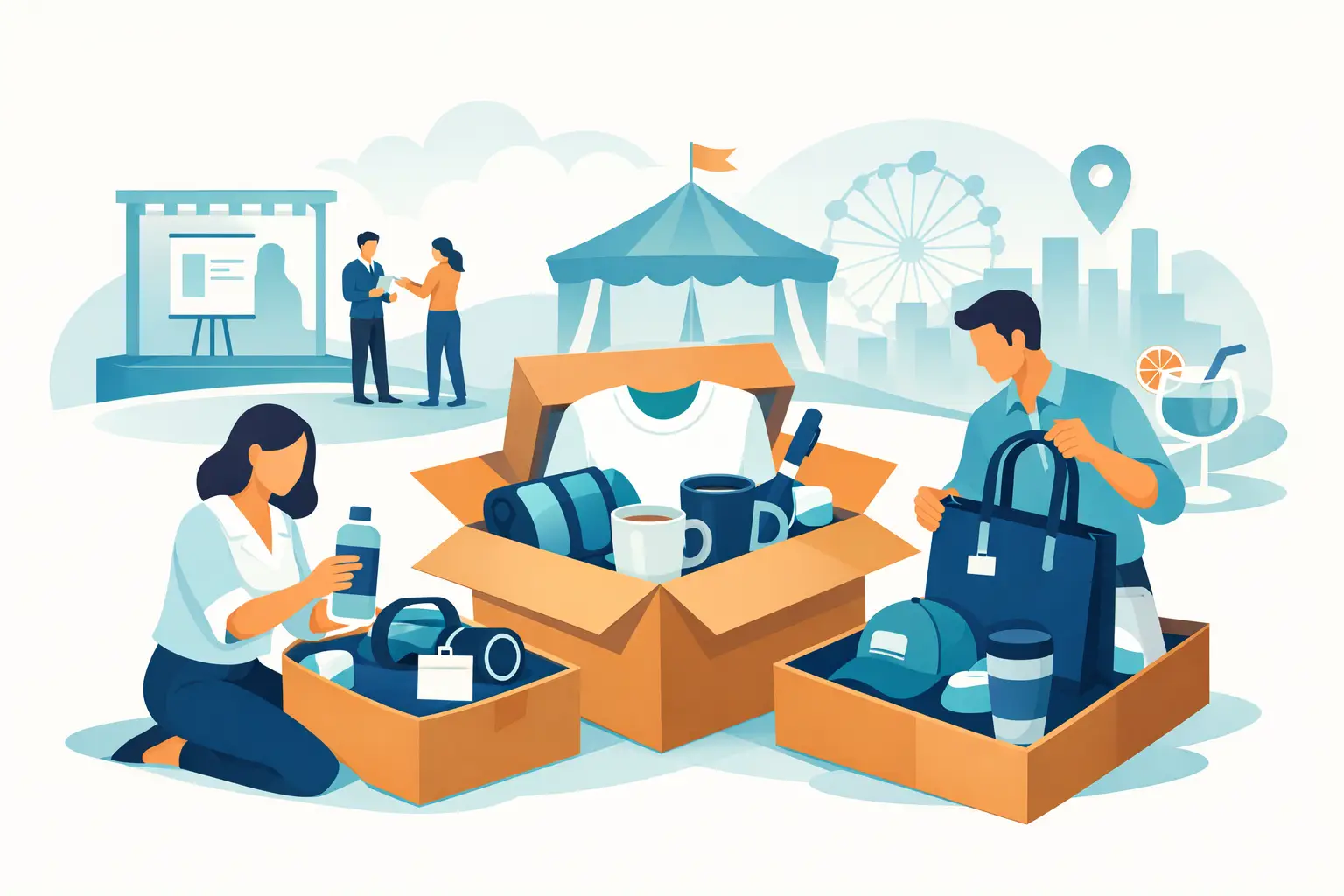

Event deadlines do not slip just because sourcing gets complicated. When marketing teams, HR managers, procurement leads, and event coordinators are all pulling from different vendors, small gaps turn into visible problems – mismatched branding, delayed deliveries, missing print materials, and giveaway items that feel disconnected from the event itself. That is why custom event kits for companies have become a practical purchasing solution, not just a packaging trend.
A well-built event kit brings the right products, printed materials, and branded assets together in one coordinated set. It reduces decision fatigue, shortens buying cycles, and gives companies better control over presentation. For organizations managing conferences, trade shows, onboarding events, client meetings, employee programs, or campus activations, that level of control matters.
What custom event kits for companies actually include
Custom event kits for companies are not limited to swag bags. In a business setting, an event kit is a curated package of branded items assembled around a specific use case, audience, and budget. The value comes from how the components work together.
For a trade show, that may mean branded drinkware, writing instruments, notebooks, brochures, table displays, badge inserts, and booth graphics. For an internal event, it could include apparel, welcome cards, certificates, desk accessories, and branded packaging. For a client-facing event, the kit may focus more on presentation – premium gift items, printed inserts, and custom boxes that support a polished handoff.
The strongest kits usually combine merchandise with print and display materials. That is where many companies run into sourcing problems if they buy each category separately. One vendor may handle apparel, another may print brochures, and another may produce signage. The result is often inconsistent colors, uneven lead times, and more back-and-forth than the event team expected.
Why companies are shifting to kit-based event sourcing
The appeal is straightforward. Buyers want fewer moving parts.
A custom event kit helps standardize purchasing across departments and locations. Instead of rebuilding the same order for every event, companies can create repeatable kits for recruiting fairs, annual meetings, onboarding sessions, sales kickoffs, or customer appreciation events. That makes budgeting easier and gives internal stakeholders a clearer approval path.
There is also a brand control benefit. When products, packaging, inserts, and event materials are selected together, the event feels intentional. That consistency affects how attendees, prospects, and employees perceive the company. A low-cost giveaway can still look organized if the full kit is cohesive. On the other hand, premium items can lose impact if the printed collateral and display materials look like they came from a different program.
Efficiency is another reason kit-based sourcing works well. Procurement teams are not just buying items. They are buying time, predictability, and fewer vendor conversations. Consolidating merchandise, printing, and event branding under one supplier can reduce admin work in ways that matter long after the event is over.
How to build custom event kits for companies
The best approach starts with the event objective, not the product catalog. A recruiting event needs a different mix than a client gifting program. A conference handout kit has different requirements than an executive welcome package. If the objective is unclear, the kit usually becomes a random collection of branded items.
Start with audience and use case
Ask who the kit is for and what action it should support. Are you trying to increase booth engagement, improve employee participation, strengthen client relationships, or equip staff for a branded event presence? That answer should shape the product mix.
For example, a university event may prioritize practical, high-volume items such as tote bags, notebooks, and pens. A corporate leadership event may call for better presentation with premium drinkware, journals, name badges, and printed welcome materials. A field marketing kit might need lightweight, portable items plus display assets that can be deployed quickly.
Match the kit to budget reality
Not every event justifies premium packaging or high-end merchandise. Volume, audience value, and event purpose all affect what makes sense.
A common mistake is overspending on the item and underspending on the presentation, or the reverse. In many cases, a mid-range product with strong branding and good packaging performs better than a premium item with weak visual consistency. Budget should be allocated across the full kit – product, print, packaging, and any display components.
Keep the selection practical
Useful items tend to deliver stronger long-term brand exposure than novelty products. Drinkware, stationery, tech accessories, bags, writing instruments, and apparel remain reliable because they fit business use. That does not mean every kit should look the same. It means utility should guide the shortlist.
If sustainability matters to your audience or brand standards, eco-friendly items can make sense, but only if quality and usability are still there. Buyers are right to be cautious here. Some eco-positioned items look good in a pitch and perform poorly in actual use. Product choice should balance message, durability, and budget.
Include print and presentation from the start
This is where many event kits improve. A branded item on its own is only part of the experience. Printed inserts, product sleeves, presentation boxes, event signage, table materials, and branded backdrops all contribute to how the kit is received.
When these elements are planned together, the event looks more professional and the buyer avoids last-minute print requests that create rush fees and approval problems. For companies running exhibitions or formal corporate events, booth materials and collateral should not be treated as separate purchases if they are supporting the same audience interaction.
Common event kit formats by business need
There is no single ideal configuration, but a few formats are consistently useful.
A trade show kit is usually built around visibility and giveaway volume. It may include booth graphics, branded table covers, brochures, badges, pens, tote bags, and a practical handout item such as a bottle or notebook. The focus is reach, brand recall, and easy distribution.
An employee event or onboarding kit works better when it feels structured and useful. Apparel, mugs, notebooks, ID accessories, desk items, and welcome materials are common choices. Here, presentation has a stronger internal culture role, so packaging and printed messaging carry more weight.
A client event kit often needs a more polished finish. Premium stationery, executive drinkware, curated gift items, printed cards, and clean packaging are common because the kit reflects brand standards directly. The quantities may be smaller, but expectations are higher.
A conference or seminar kit often combines attendee materials with practical takeaways. Folders, writing instruments, printed agendas, name tags, lanyards, and branded accessories still work because they support the event in real time.
Where companies usually get it wrong
The biggest issue is treating the kit as a collection of products instead of a coordinated business asset. That leads to over-ordering some items, forgetting critical print pieces, and choosing products based on price alone.
Lead time is another problem. Customization, print approvals, packaging assembly, and delivery all take time. If one element is delayed, the entire kit can be affected. This is especially true for events that require booth components or larger-format printed materials in addition to merchandise.
There is also the issue of too much variety. Buyers sometimes try to satisfy every stakeholder by including too many items. That can increase cost without improving impact. A tighter kit with clear purpose usually performs better than a large assortment with no real logic behind it.
Vendor fragmentation remains a practical challenge as well. The more suppliers involved, the harder it is to maintain brand consistency and delivery control. For companies ordering at scale or across recurring events, centralized sourcing is often the more reliable model.
Choosing a supplier for custom event kits for companies
A supplier should be able to support more than product decoration. The real requirement is coordination.
That means access to a broad merchandise catalog, custom printing capability, event branding support, and enough operational experience to manage timelines across categories. If your event requires giveaway items, printed collateral, signage, packaging, and possibly display hardware, it helps to work with a supplier that can manage those pieces together.
Breadth matters, but so does guidance. A large catalog is only useful if the supplier can narrow options based on event type, audience, and budget. Business buyers do not need hundreds of disconnected suggestions. They need a workable kit structure they can approve and reorder.
For companies that want one source for promotional merchandise, printed materials, and event branding assets, The Wrapperz supports that kind of consolidated buying approach through its product range and customization capabilities.
The real value is operational, not just visual
A strong event kit looks good, but that is not the main reason companies invest in one. The real return comes from reducing sourcing friction, improving brand consistency, and making event execution easier for internal teams.
When the right products, print assets, and branded materials are planned as one package, the event is easier to manage and more professional in market. That matters whether you are preparing for a trade show, welcoming new employees, meeting clients, or supporting a campus program. The smart move is not to add more items. It is to build a kit that does its job clearly, on brand, and on time.