
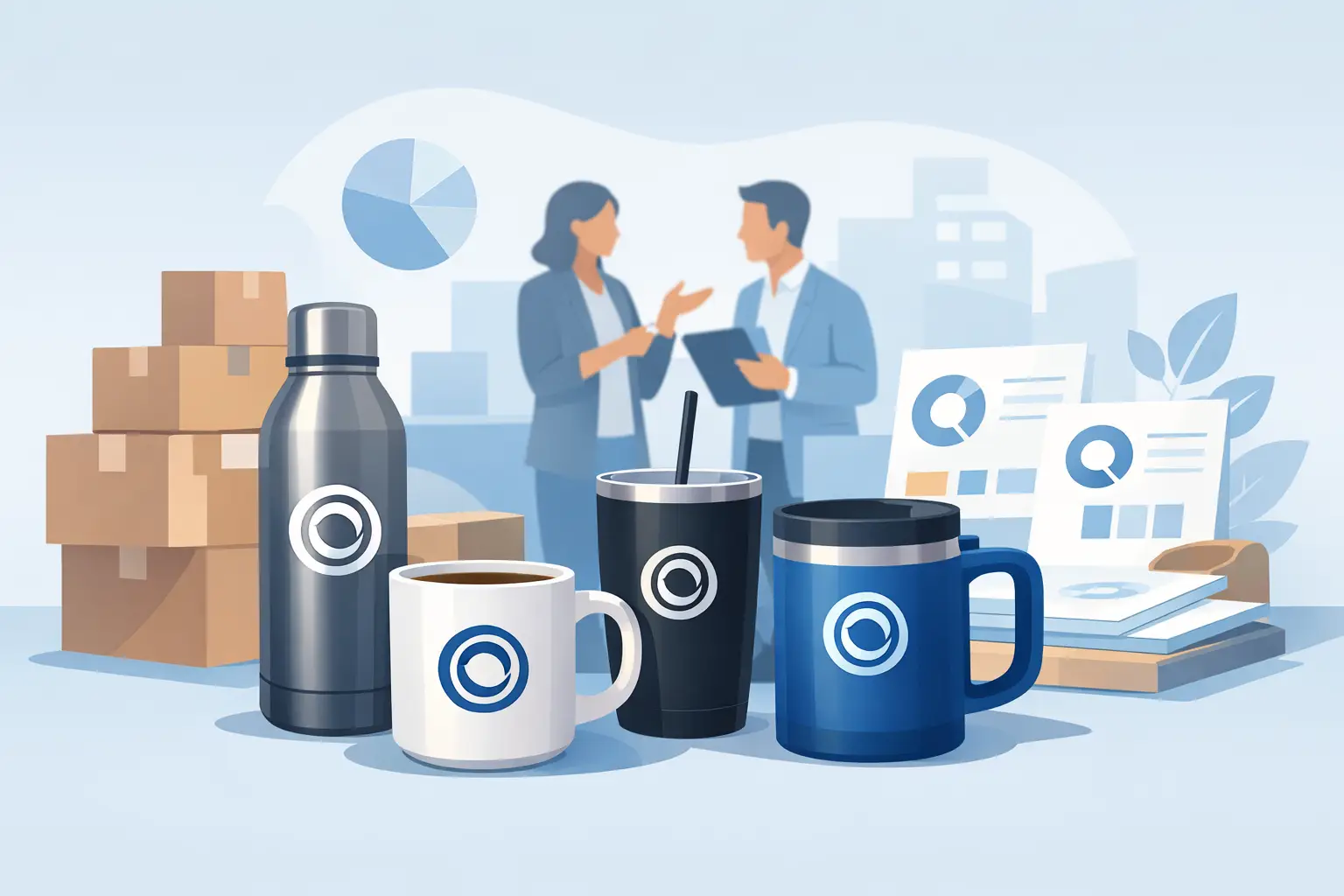

When a deadline is tied to a trade show, onboarding run, campus event, or client gifting campaign, drinkware tends to move to the top of the list fast. It is practical, easy to distribute, and visible long after the handoff. That is why custom logo drinkware bulk remains one of the most consistent choices for companies that need branded merchandise with everyday use.
For procurement teams, marketers, HR managers, and event planners, the appeal is straightforward. One product category can cover employee welcome kits, conference giveaways, executive gifts, office pantry use, and promotional campaigns without forcing a complete shift in sourcing strategy. The real question is not whether drinkware works. It is which type works best for your audience, budget, timeline, and brand standards.
Why custom logo drinkware bulk works so well
Drinkware solves a practical problem for the recipient while giving the brand repeated exposure. A tote bag may be used occasionally. A pen may disappear into a drawer. A bottle, tumbler, or mug often stays in daily circulation at desks, in cars, in meeting rooms, and at the gym. That repeated use matters when the goal is sustained visibility rather than a one-time impression.
It also works across departments. Marketing can use it for promotions and lead generation. HR can include it in employee kits. Administration can order matching office drinkware for internal use. Events teams can choose styles that align with booth traffic, sponsorship packages, or VIP gifting. When one product category fits multiple business needs, buying in volume becomes easier to justify.
There is also a presentation advantage. Branded drinkware tends to look more substantial than many low-cost giveaway items, even when ordered at scale. That helps companies maintain a professional image without moving immediately into premium gift budgets.
Choosing the right custom logo drinkware bulk option
The best item depends on where it will be used and who will receive it. Bulk ordering only delivers value when the product matches the context.
Tumblers for modern office and event use
Tumblers are a strong option for companies that want a contemporary promotional item with broad appeal. They fit employee gifting, conference giveaways, and client handouts well because they feel current and practical. Depending on the material and lid style, tumblers can sit at different price points, which gives buyers room to balance budget and presentation.
If the audience includes commuting professionals or hybrid teams, tumblers usually perform better than traditional mugs. They are portable, easier to use on the move, and often preferred in workplaces where people shift between desk, car, and meeting room.
Water bottles for wellness, campus, and outdoor branding
Branded bottles are especially effective for universities, fitness-related promotions, employee wellness initiatives, field events, and summer campaigns. They align naturally with hydration and sustainability messaging, which can strengthen the perceived relevance of the gift.
That said, bottles are not one-size-fits-all. A lightweight plastic option may be right for a large public event where cost control matters most. A stainless steel insulated bottle is better suited for corporate gifting or internal distribution where perceived value is higher on the priority list.
Mugs for desks, offices, and long-term use
Mugs still have a place, particularly for internal branding, employee appreciation, and office environments. They work well in welcome kits, holiday sets, and desk-based gifting because they stay visible in a fixed workspace. For organizations that want consistent branding across office locations, mugs offer a clean, familiar format.
The trade-off is portability. If your audience is highly mobile, mugs may see less use outside the office. But for workplaces with regular desk presence, they remain reliable.
Premium drinkware for client and executive gifting
Not every campaign should use the lowest unit cost. For client retention, executive gifting, board events, or milestone celebrations, premium drinkware can carry more impact. Better finishes, insulated construction, cleaner branding placement, and stronger packaging all contribute to a more polished result.
In these cases, quantity matters less than impression. A smaller order of higher-quality drinkware may outperform a large giveaway run if the business objective is relationship building rather than reach.
Branding decisions that affect the final result
The item itself is only half the decision. How the logo is applied, where it sits, and how much visual information is included can make the difference between a product that looks corporate and one that looks overproduced.
For most businesses, simpler branding performs better. A clear logo, restrained color use, and a print area that respects the product shape usually create a more professional finish. Trying to fit a slogan, website, campaign line, and oversized logo onto a small tumbler often reduces readability.
Printing method matters too. Different materials and finishes support different branding approaches, and not every method is equally suited to every budget or design. A high-contrast one-color logo may be ideal for a large-volume event order. A more refined branding method may make sense for premium gifting. The right choice depends on how long the item needs to last, how visible the branding should be, and what kind of impression the company wants to make.
Color selection should also be handled carefully. Brand consistency is important, but strict color matching is not always possible on every material. It is better to choose product colors and imprint methods that complement your brand than to force a near-match that feels off in person.
Budget, quantity, and timing considerations
Bulk buying improves unit economics, but the lowest price is not always the smartest buy. If a cheaper bottle leaks, scratches easily, or feels too disposable, the branding value drops with it. Buyers should weigh cost against durability, usefulness, and audience expectations.
Minimum order quantities vary by product type and decoration method, which affects planning. If you are buying for multiple departments or locations, consolidating volume into one run can improve pricing and consistency. That approach also reduces the time spent managing separate vendors, separate proofs, and separate delivery schedules.
Lead time is another major factor. Event dates, onboarding schedules, and campaign launches do not move just because a product is delayed. Buyers should account for production time, proof approval, and shipping early in the process, especially when selecting custom colors, premium finishes, or complex branding treatments.
This is where working with a supplier that already handles broader corporate merchandise and print needs can simplify execution. If your order sits alongside event materials, signage, printed inserts, or gift packaging, coordination gets easier and brand consistency is easier to maintain.
When to standardize and when to mix styles
Some organizations benefit from choosing one standard drinkware style for repeated use. This works well for onboarding, office programs, internal events, and recurring gifting because it creates a consistent branded look and simplifies reordering.
Other companies need a mixed approach. A trade show may call for a cost-efficient giveaway bottle, while client kits require a more premium tumbler. A university might need one style for admissions events and another for staff recognition. There is no rule that says one drinkware item has to cover every use case.
The key is to align the product with the objective. If the goal is broad distribution, cost and visual appeal may lead the decision. If the goal is retention, appreciation, or premium presentation, material quality and finish deserve more weight.
How custom logo drinkware bulk fits into larger campaigns
Drinkware rarely has to stand alone. It fits well into welcome kits, conference packs, employee appreciation sets, seasonal gifting, and branded event bundles. That makes it especially useful for businesses that want one supplier relationship for merchandise, packaging, printing, and display materials.
A bottle paired with branded notebooks, pens, tech accessories, or tote bags creates a more complete kit without adding sourcing complexity across multiple vendors. For event teams, that matters. For procurement, it matters even more.
Companies that manage several brand touchpoints at once often get better results when drinkware is planned as part of a wider branded package rather than a standalone item. It helps with visual consistency, budget control, and operational efficiency. For buyers looking to streamline that process, The Wrapperz supports custom merchandise alongside print and event branding requirements from one source.
What buyers should confirm before placing an order
Before approving any drinkware run, confirm the practical details. Check the actual capacity, material, lid style, imprint area, packaging format, and estimated production time. Ask whether the selected product suits hot drinks, cold drinks, or both. Review artwork carefully and make sure the branding scale looks right on the final proof.
It is also worth thinking about distribution. An item that looks great in a catalog may be less effective if it is heavy to ship, awkward to pack into kits, or too large for event transport. The best bulk order is one that works not just on paper, but through delivery, handout, and real-world use.
A good drinkware decision is rarely about trend alone. It is about fit. When the product, branding method, quantity, and timeline are aligned, custom drinkware becomes one of the easiest branded categories to repeat with confidence for future campaigns.
If you are ordering for a team, an event, or a client-facing program, start with the use case first and let that guide the product choice. That one step usually saves more time and budget than chasing the cheapest option on the page.