
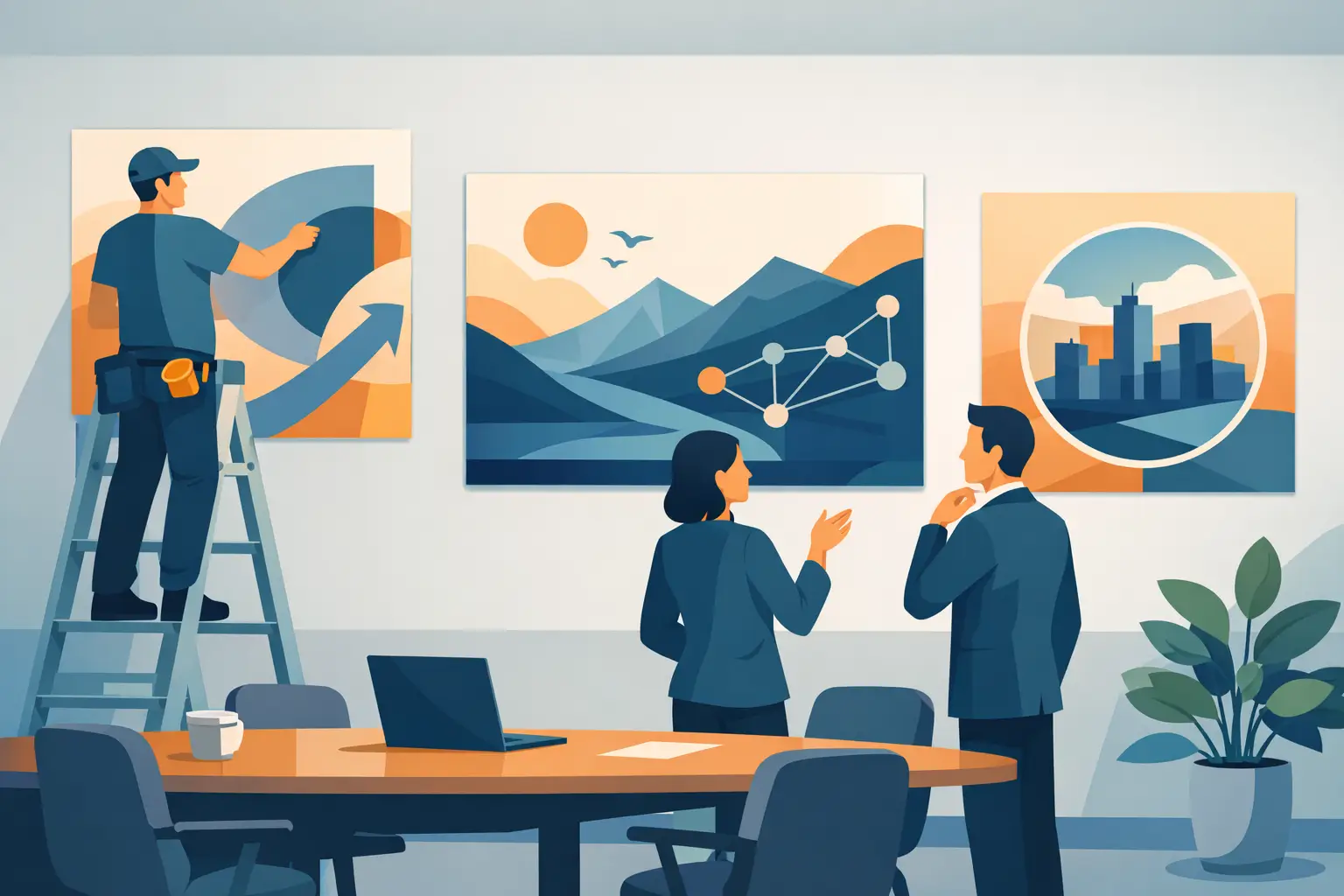

A blank office wall says more than most teams realize. It can make a reception area feel unfinished, leave meeting rooms without personality, and weaken the brand impression you worked hard to build everywhere else. Custom wall art for office branding fixes that by turning unused space into a clear visual asset – one that supports brand identity, workplace culture, and client perception.
For procurement teams, marketers, HR managers, and office administrators, wall art is not just decor. It is part of the physical brand system. The right installation can align your office with your event materials, printed collateral, promotional merchandise, and overall corporate presentation. The wrong one can look generic, dated, or disconnected from the rest of your brand assets.
Why custom wall art matters in branded workspaces
Office branding is often judged in small moments. A visitor waiting in reception notices your walls before they notice your brochure stand. A new employee forms an impression of company culture during onboarding. A client in a conference room reads the environment as part of your professionalism.
That is where custom wall art earns its value. It helps translate brand guidelines into a real environment. Logos, mission statements, timeline graphics, value walls, product visuals, location maps, and culture-focused messaging all become visible in a practical way. Instead of leaving branding confined to a website or slide deck, you place it where employees and visitors experience it every day.
There is also a consistency advantage. If your company already invests in branded merchandise, event kits, exhibition displays, and printed materials, your office should not feel like an unrelated space. Wall graphics, framed prints, acrylic panels, canvas pieces, and dimensional logo displays help bring the same visual language into your workplace.
Custom wall art for office branding by business area
Not every wall should do the same job. The strongest office branding plans assign a purpose to each space and select artwork accordingly.
Reception and lobby areas
This is usually the first priority because it shapes first impressions fast. A reception wall often works best with a clean logo display, a brand message, or a statement piece that reflects your company identity. For some businesses, that means a polished acrylic logo sign. For others, it might be a large-format graphic showing company milestones, regional presence, or industry expertise.
The choice depends on how formal your brand needs to feel. Financial, legal, and corporate services firms often prefer restrained layouts and premium materials. Creative, education, and technology companies may want more color and more narrative.
Meeting rooms and boardrooms
These spaces benefit from wall art that supports credibility without becoming a distraction. Abstract brand-color pieces, product photography, industry-themed graphics, and subtle mission-led messaging work well here. If video calls are common, wall art should also look professional on camera.
This is one area where oversized designs can backfire. A boardroom wall packed with text or too many visual elements can pull attention away from presentations and conversations.
Workstations and staff zones
Employee-facing walls have a different role. They can reinforce culture, highlight team values, or create a more engaging daily environment. Recognition walls, departmental branding, motivational messaging, and visual storytelling around company achievements are common options.
That said, tone matters. Employees usually respond better to branding that feels thoughtful and relevant than to generic slogans placed on every available surface.
Hallways, breakout areas, and internal corridors
These are often missed, which is a mistake. Transitional spaces are useful for timeline graphics, branded patterns, campaign visuals, and company history walls. They can make larger offices feel more connected and better organized.
For companies with multiple departments, hallway art can also help create wayfinding support while keeping the brand visible.
Choosing the right formats and materials
The format should match the environment, budget, and expected lifespan of the installation. There is no single best option for every office.
Vinyl wall graphics are popular because they are flexible, cost-effective, and suitable for bold branding. They work well for quotes, large logos, maps, and campaign graphics. They are especially useful when you need impact across a large surface without the higher cost of rigid signage.
Framed prints and canvases create a more refined look. They are a practical fit for executive offices, meeting rooms, hospitality-style spaces, and client-facing environments where you want branding to feel polished rather than highly promotional.
Acrylic and metal signage deliver a premium corporate presentation. These materials are often chosen for reception branding, directional signage, and permanent logo installations. They tend to suit companies that want durability and a more architectural finish.
Wall murals can make the biggest visual statement, but they require more planning. A mural can transform a training room, open office area, or innovation space, but only if the artwork scales well and remains relevant over time. Highly campaign-specific designs may look dated faster than evergreen brand visuals.
What effective custom wall art for office branding includes
Strong wall art is not just a logo enlarged to fill space. It should connect to a broader branding objective.
In some offices, the goal is trust. In that case, brand heritage, certifications, project portfolios, and clean presentation may matter most. In others, the goal is employee engagement. That might call for culture walls, team recognition displays, or messaging tied to company values.
For customer-facing businesses, office branding often needs to do both. It should reassure visitors that the company is established and organized while also showing that the workplace has energy and direction.
The visual design should follow your existing brand system. That includes fonts, colors, photography style, icon treatment, and tone of voice. If your office walls use one set of visuals while your brochures, event booths, and branded merchandise use another, the result feels fragmented.
This is why many buyers prefer working with a supplier that can support multiple branding categories, not just one product line. When wall art is planned alongside printing, displays, and other branded assets, consistency is easier to maintain.
Common mistakes buyers should avoid
The most common issue is treating wall art as an afterthought. When businesses rush the process, they often choose generic imagery, low-impact sizing, or designs that do not reflect the brand accurately.
Another mistake is focusing only on appearance and ignoring placement. A great design can fail if it is installed in a poorly lit area, hidden behind furniture, or scaled incorrectly for the wall.
There is also the question of permanence. Some companies invest in highly permanent installations for messages that may change within a year. Others choose temporary graphics for flagship spaces that would benefit from a more durable finish. The better approach is to decide early which walls should be evergreen and which should stay flexible.
Budget planning matters too. It is possible to create a strong branded office without overbuilding every surface. Often, a few high-impact zones produce better results than spreading a limited budget too thin across the whole office.
How to plan office wall art with fewer revisions
The cleanest projects start with purpose, not product. Before selecting materials, define what each wall needs to achieve. Is it meant to welcome visitors, support culture, improve navigation, or add polish to a client-facing room?
Then review your available assets. Many companies already have usable materials in their brand guidelines, campaign libraries, annual reports, or event graphics. Reworking existing brand elements can reduce design time and improve consistency.
It also helps to think in phases. If you are branding a new office or updating an existing one, you do not have to install everything at once. Start with reception, key meeting rooms, and visible employee zones. Expand later as budgets and priorities allow.
For organizations managing multiple branded needs, there is a clear operational advantage in using one partner for wall art, printed materials, event displays, and related visual assets. It reduces back-and-forth, shortens sourcing time, and makes color and design alignment easier across categories. That is especially useful for companies balancing office updates with exhibitions, gifting programs, and internal campaigns. Buyers looking for that kind of support can review options through The Wrapperz at https://thewrapperz.com.
When office branding should be updated
Wall art should not stay untouched for years just because it is installed. Rebranding, office renovations, mergers, leadership changes, and culture shifts are all good reasons to review what is on your walls.
A refresh may also be worth considering when your office no longer matches how your business presents itself externally. If your trade show booth, printed collateral, and digital brand have evolved, but your office still reflects an older identity, visitors will notice the gap.
The best office branding does not compete for attention. It supports the business quietly and consistently, making the space feel considered, professional, and aligned with the brand people already know. When custom wall art is planned with that standard in mind, it stops being decoration and starts doing a real job.