
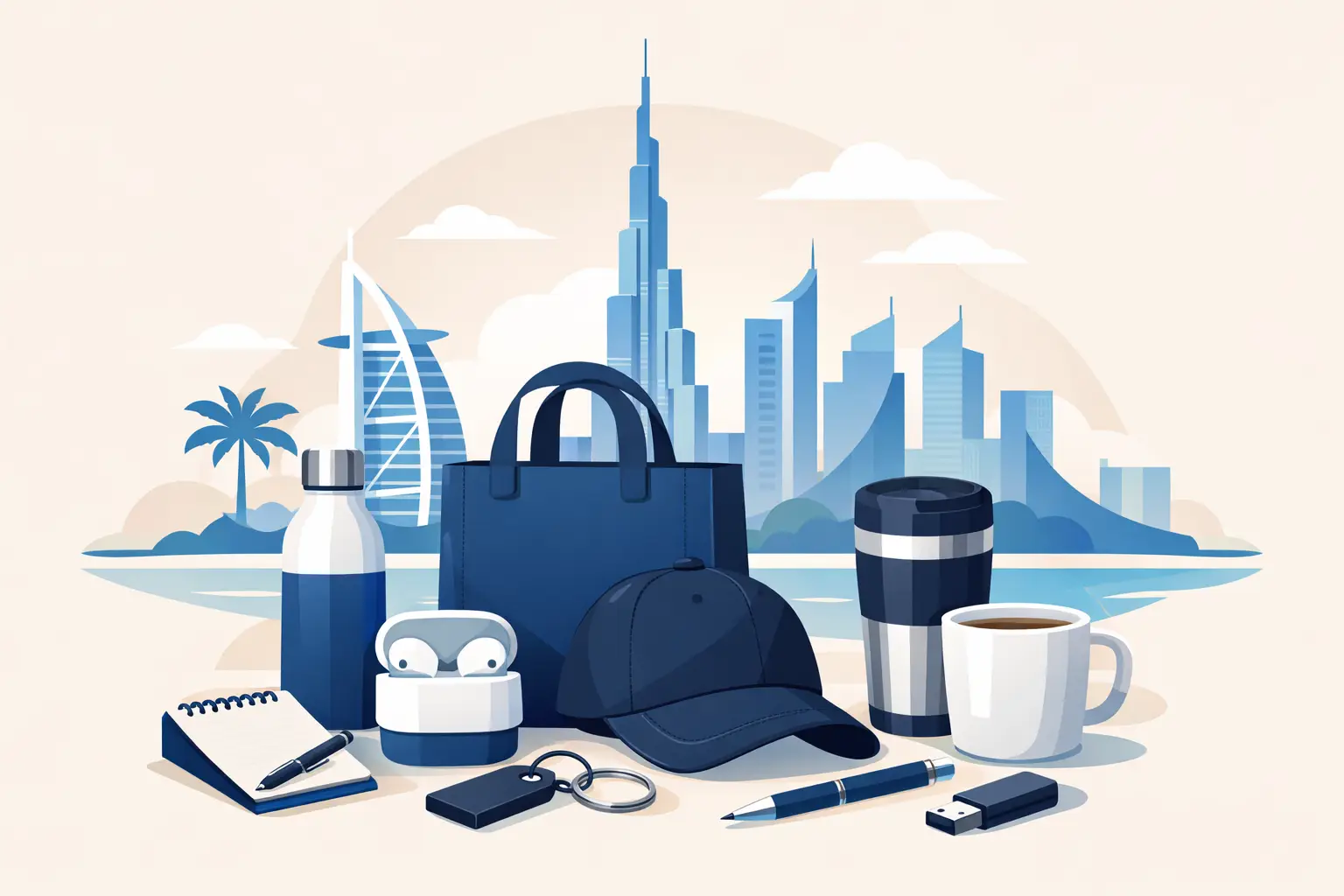

When a campaign deadline is close, the wrong giveaway creates two problems at once – wasted budget and weak brand recall. The best promotional items Dubai companies choose are the ones that fit the audience, the setting, and the brand standard without creating sourcing headaches for procurement, marketing, or event teams.
For most businesses, the question is not simply which item is popular. It is which product will be used, noticed, and delivered on time in the right quantities with the right branding method. That is why practical categories consistently outperform novelty products, especially when companies need repeat orders, event kits, staff gifts, or client-facing merchandise.
What makes the best promotional items Dubai businesses buy?
A good promotional item does one job well. A strong promotional item does several jobs at once – it carries your logo clearly, matches your brand positioning, fits the budget, and remains useful after the event or campaign ends.
That matters because promotional buying is rarely isolated. A marketing team may need giveaway items for an exhibition, printed brochures for the same booth, and branded gifts for key clients. HR may need onboarding kits that include stationery, drinkware, and bags. Admin teams may need to standardize corporate gifting across departments. In each case, the best item is the one that works within a broader branded system.
Usefulness is usually the first filter. If the item solves a small daily need, recipients are more likely to keep it. Print area comes next. Some products look attractive in a catalog but offer limited branding visibility once customized. Lead time is another deciding factor. Certain premium gifts make sense for executive gifting, but they may not be the right fit for a fast-moving event order.
12 product categories that consistently perform
1. Drinkware
Branded bottles, tumblers, mugs, and travel cups remain one of the safest corporate choices because they combine long-term use with strong logo visibility. They work for employee gifts, conference giveaways, training events, and client appreciation packs.
The trade-off is positioning. A low-cost plastic bottle may suit a mass campaign, while a vacuum-insulated tumbler fits a more premium audience. The item itself is not enough – finish, packaging, and branding method affect how the gift is perceived.
2. Notebooks and stationery sets
For onboarding, seminars, internal meetings, and university events, notebooks still perform well. They are easy to customize, simple to distribute, and useful across industries.
Stationery works especially well when paired with pens, folders, and printed inserts as part of a coordinated set. If your goal is brand consistency across departments, this category is reliable and easy to scale.
3. Pens and writing instruments
Pens are often dismissed as basic, but they remain one of the most efficient promotional products for volume campaigns. They are budget-friendly, lightweight, and suitable for trade shows, front-desk distribution, training sessions, and corporate visits.
The difference is in quality selection. A poorly made pen reflects badly on the brand. A smooth-writing metal or soft-touch pen can elevate even a simple campaign without pushing the cost too high.
4. Tote bags and backpacks
Bags offer excellent branding area and immediate practical value. They are useful at exhibitions, conferences, retail activations, employee events, and onboarding programs.
Tote bags are ideal for wide distribution and event kits. Backpacks and laptop bags are better suited to staff gifting, premium campaigns, or client giveaways. If recipients will carry the item in public, the brand exposure extends well beyond the original event.
5. Tech accessories
Power banks, USB drives, wireless chargers, mouse pads, and cable organizers are strong options for modern office audiences. They align well with corporate environments and usually feel more current than generic giveaways.
This category works best when the audience is likely to use the item regularly. Tech accessories can also support a more premium brand image, although specifications and compatibility matter. Cheap electronic items may create more frustration than value, so product quality should be reviewed carefully.
6. Apparel
T-shirts, polos, caps, jackets, and uniforms can serve both promotional and operational purposes. They are effective for staff visibility at events, internal team identity, outdoor campaigns, and branded corporate programs.
Apparel requires more planning than smaller merchandise. Sizing, fabric choice, and print durability all affect the result. When executed well, it creates a stronger brand presence than many small giveaway items.
7. Eco-friendly promotional items
Reusable products made from bamboo, recycled materials, wheat straw, jute, or RPET have moved from niche to standard consideration. Businesses that want to reflect sustainability goals often start here.
The key is to avoid choosing eco-themed products only for messaging. The item still needs to be genuinely useful. Reusable bottles, lunch containers, notebooks, and shopping bags usually perform better than symbolic items with limited function.
8. Desk accessories
Products like organizers, planners, calendars, sticky note sets, and phone stands stay visible in workspaces for long periods. That makes them useful for office-based audiences and internal branding.
They are especially effective when businesses want practical items without moving into higher gift budgets. Desk products also pair well with printed collateral for welcome kits and administrative programs.
9. Awards and recognition items
Promotional merchandise is not always about lead generation. Sometimes it is about employee recognition, sales incentives, or partner appreciation. Plaques, trophies, and branded awards support those use cases well.
This category has a different objective from standard giveaways. It is less about mass exposure and more about presentation, permanence, and perceived value. For HR and corporate leadership teams, that distinction matters.
10. Lanyards, badges, and event essentials
For exhibitions, conferences, and internal functions, event-use items deserve more attention than they usually get. Lanyards, badge holders, wristbands, folders, and branded registration materials play a direct role in how organized the event appears.
These products may not feel exciting on their own, but they are often some of the most visible branded items in the room. They also make sense when ordered alongside booths, backdrops, signage, and printed handouts.
11. Gift sets
When businesses need more impact, combining products into a curated set is often better than choosing one standalone item. A notebook, pen, bottle, and bag can become a practical employee welcome kit. A premium tumbler, tech accessory, and branded box can become a strong client gift.
Gift sets work because they improve presentation and make it easier to match budget tiers. They also help standardize recurring orders across departments or campaigns.
12. Custom printed collateral and branded packaging
This category is easy to overlook because it is not always treated as a promotional item. But branded boxes, sleeves, inserts, folders, table materials, and printed handouts shape how merchandise is received.
A standard product presented well often performs better than a premium product packed poorly. For businesses trying to maintain consistency, packaging and print should be part of the buying decision, not an afterthought.
How to choose the right product for your campaign
The best promotional items Dubai buyers select usually start with use case, not product trend. A trade show giveaway needs speed, portability, and easy distribution. A leadership gift needs stronger presentation. An employee kit needs consistency across multiple items. Once the application is clear, product selection becomes much easier.
Budget should be evaluated by cost per outcome, not just unit price. A cheaper item that gets discarded immediately is often more expensive in practical terms than a mid-range item that stays in use for months. That is particularly true for B2B campaigns where the audience is smaller and each touchpoint matters more.
Customization method matters too. Screen printing, engraving, UV printing, embroidery, and full-color branding do not create the same visual result. Some items look better with subtle branding, while others benefit from bold logo placement. The product and the branding method need to work together.
Lead time is another common issue. If a company is sourcing promotional products, printed materials, and event branding from separate vendors, delays usually show up at the worst moment. Working with one supplier that can coordinate merchandise, print, and display requirements reduces that risk and keeps brand presentation more consistent across every asset.
A practical buying approach for corporate teams
If you are ordering for a business, think in terms of programs rather than single items. You may need one set of products for exhibitions, another for employee engagement, and another for client gifting. Building those categories in advance saves time on repeat purchasing and reduces rushed decisions before events.
This is where a broader supplier model becomes useful. A company like The Wrapperz can support merchandise, print, and display requirements together, which makes purchasing simpler for teams that need more than just one product line. For procurement and marketing teams, that convenience is not a small benefit. It directly affects speed, coordination, and brand consistency.
The strongest promotional item is rarely the flashiest one. It is the one that fits the audience, carries the brand well, and arrives ready for use when the campaign goes live. If you choose with that standard in mind, the product does more than fill a table at an event – it keeps your brand in circulation after the moment has passed.