
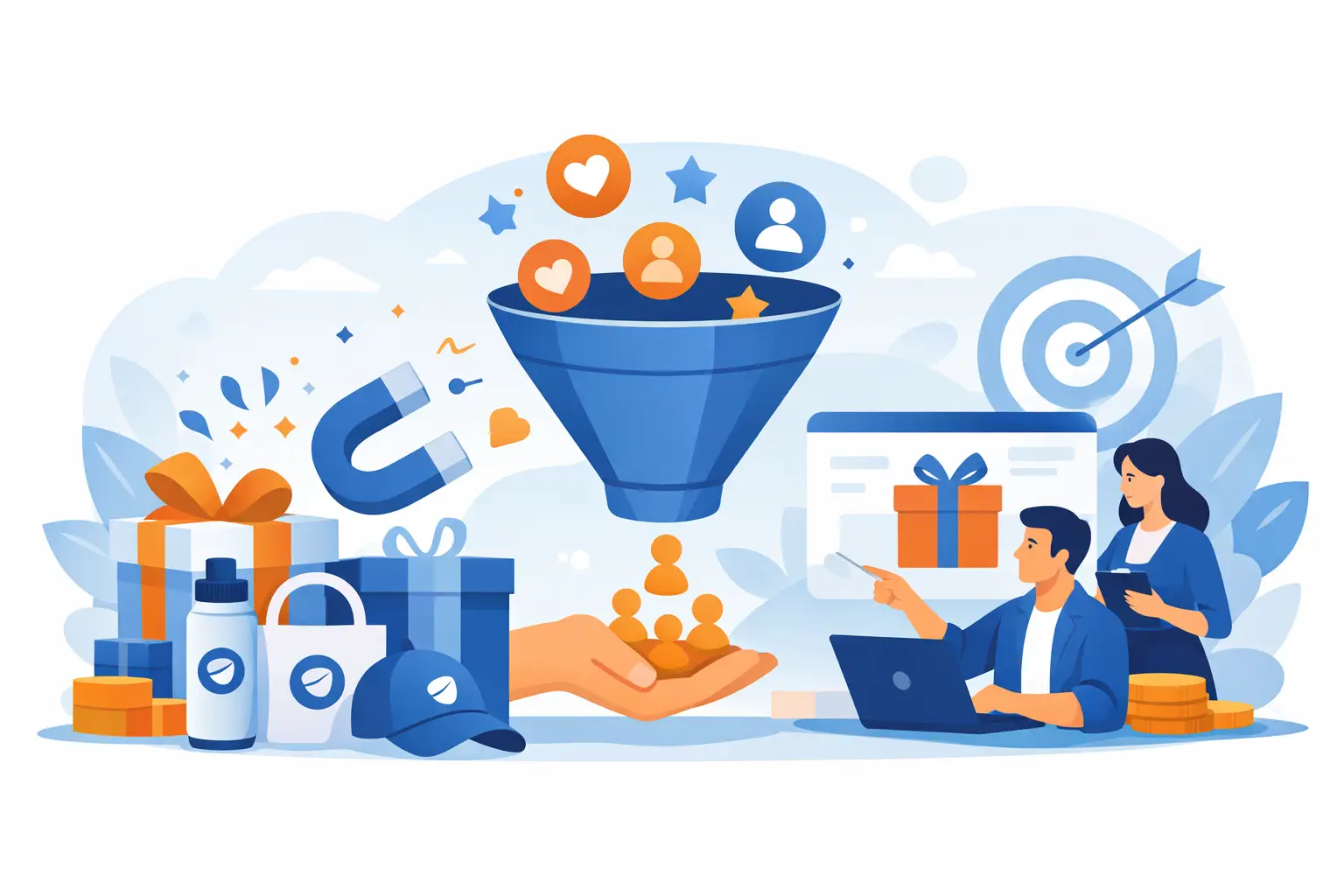

Most giveaways fail for a simple reason: they create foot traffic, not qualified interest. If your team is investing in trade shows, corporate events, campus outreach, or client campaigns, branded giveaway lead generation only works when the product, message, and follow-up are planned as one system.
A branded item can open a conversation fast. It can also drain budget fast when it is chosen for price alone, handed out too broadly, or disconnected from a real capture process. For procurement teams, marketers, and event managers, the goal is not to give away more products. The goal is to generate leads that sales can use, nurture, and convert.
What branded giveaway lead generation actually means
Branded giveaway lead generation is the use of customized promotional products to attract attention and motivate a prospect to share contact details, book a meeting, scan a QR code, enter a campaign, or continue a sales conversation. The branded item is not the end result. It is the incentive that moves someone one step deeper into your funnel.
That distinction matters. A stress ball tossed into a bowl at an expo booth may create visibility, but visibility alone is hard to measure. A premium tumbler offered after a product demo, a branded tech accessory tied to a registration form, or an event kit paired with a scheduled consultation does something different. It gives your team a reason to exchange value for information.
For B2B companies, this is especially relevant because buying cycles are longer and touches matter. A giveaway should support memory, trust, and utility. If the item stays on a desk, in a laptop bag, or at a workstation, your brand remains present after the event is over.
Why some giveaway campaigns produce leads and others produce clutter
The biggest difference is intent. A lot of companies choose products based on what looks popular in a catalog. That can work for broad awareness campaigns, but lead generation needs a tighter fit. The item should match the audience, the setting, and the value of the action you are asking someone to take.
If you are speaking to procurement managers at an industry exhibition, practical office products, premium notebooks, quality drinkware, or branded tech accessories tend to align better with a professional setting than novelty items. If the audience is HR or employee engagement teams, welcome kits, desk accessories, or apparel may make more sense. If you are targeting students or conference attendees, budget, portability, and immediate usefulness matter more.
There is also a trade-off between reach and qualification. Lower-cost items can increase volume, but they usually lower the threshold for participation. Higher-value items can improve lead quality, but they reduce quantity and require better control. Neither approach is automatically right. It depends on campaign goals, sales capacity, and event economics.
Choosing the right products for branded giveaway lead generation
The best product is usually the one that people will keep and use in the context where you want your brand remembered. Utility beats novelty more often than teams expect.
Drinkware works because it has repeat visibility. Stationery works because it is easy to distribute and broadly accepted in business settings. Technology accessories can perform well when your audience is desk-based, mobile, or attending conferences. Bags are strong when the campaign happens at exhibitions, because attendees use them immediately and carry your brand across the venue. Eco-friendly products can be effective when sustainability is part of your brand positioning, but they need to feel credible, not token.
Presentation also changes perceived value. The same product in standard packaging and in a coordinated branded set will be received differently. If your campaign includes print collateral, inserts, signage, and event display materials that match the product branding, the offer feels more deliberate and more professional.
That is one reason many buyers prefer a single supplier that can coordinate merchandise, printed pieces, and event assets. It reduces the common problem of mismatched colors, delayed production, and fragmented execution.
Match the giveaway to the lead action
Not every branded item should be handed out the same way. Distribution method affects lead quality.
For top-of-funnel traffic, a low-cost branded product can attract people to a booth or activation area. This works best when staff quickly move the conversation toward a scan, sign-up, or qualifying question. Without that next step, the item becomes a generic freebie.
For mid-funnel engagement, tie a better product to a more meaningful action. That might be sitting through a live demo, completing a survey, booking a consultation, or sharing project requirements. Here, the item acts as a reward for attention and intent.
For high-value accounts, a curated branded gift can support account-based outreach before or after an event. In this case, the giveaway is not mass distribution at all. It is part of a targeted business development effort and should reflect the prospect value.
A simple rule helps: the stronger the action you want, the more selective and relevant the product should be.
Build a capture process before the event starts
A giveaway campaign is only as strong as its data flow. This is where many teams lose the return on what they purchased.
Before production begins, define what counts as a lead. Is it a badge scan, form completion, meeting request, quote inquiry, or sample request? Then define what information is required. If your sales team needs company name, role, and buying timeline, capture that at the point of interaction, not three days later from memory.
QR codes on signage, packaging, inserts, and printed cards can help connect the product to a digital action. Short landing forms work better than long ones at busy events. Staff should know what to say, what to offer, and how to qualify quickly. If there are different giveaway tiers, the rules should be clear so the team is not improvising under pressure.
This is also where print matters. Branded cards, tent displays, counter graphics, backdrops, and product tags should all reinforce the same offer. Consistency makes the campaign easier to understand and easier to act on.
How to measure branded giveaway lead generation
The most useful measurement is not how many units were distributed. It is cost per qualified lead and, where possible, cost per opportunity.
Start with total campaign cost, including the products, customization, packaging, booth materials, print, shipping, and staffing. Then compare that against lead volume, qualified lead count, meetings booked, and follow-up response. If one product generated attention but poor fit, that is useful data. If another product drove fewer sign-ups but stronger post-event engagement, that may be the better long-term choice.
Timing matters too. Some giveaways create immediate action. Others support recall over weeks or months. A branded notebook used in meetings for six months has a different kind of value than a snack-sized handout used once and forgotten.
If your company attends recurring events, compare campaigns across categories. You may find that one audience responds best to practical desk items, while another responds to premium gift sets. That kind of pattern improves future buying decisions and reduces waste.
Common mistakes that weaken results
The first mistake is choosing products with no clear role in the campaign. If the item is not tied to a lead action, it is probably just a branding expense.
The second is underestimating quality. Cheap products can hurt perception, especially in B2B environments where buyers notice finish, packaging, and usability. A lower-volume order of a better item often performs better than a larger run of something forgettable.
The third is ordering too late. Rush decisions limit customization options, increase production pressure, and often lead to compromises in print, packaging, or display coordination. Event campaigns work better when merchandise, printed materials, and booth assets are planned together.
The fourth is treating every attendee the same. Not all prospects deserve the same giveaway. Tiering your offer by audience value or engagement level helps control budget and improve lead quality.
A practical way to plan your next campaign
Start with the event or campaign objective, not the product. Decide whether you need awareness, qualified leads, meetings, or account follow-up. Then choose the giveaway category that fits the audience and setting. After that, define the trigger for receiving the item, the data you need to capture, and the printed or display materials that support the offer.
If your team is sourcing at volume, it is worth consolidating categories where possible. Merchandise, printed inserts, signage, booth graphics, and packaging are easier to manage when they are aligned from the start. For companies running multiple campaigns across departments, that coordination saves time and protects brand consistency.
In markets like Dubai, where exhibitions, corporate events, and business networking are highly active, speed and presentation can directly affect results. A campaign that looks organized and feels premium usually earns better engagement than one built from mismatched last-minute pieces.
Branded giveaway lead generation works best when the product is doing a job, not just carrying a logo. Choose items people will actually use, connect them to a clear next step, and make the full presentation feel intentional. When the giveaway supports the sales process instead of sitting beside it, you stop collecting casual interest and start building a pipeline.