
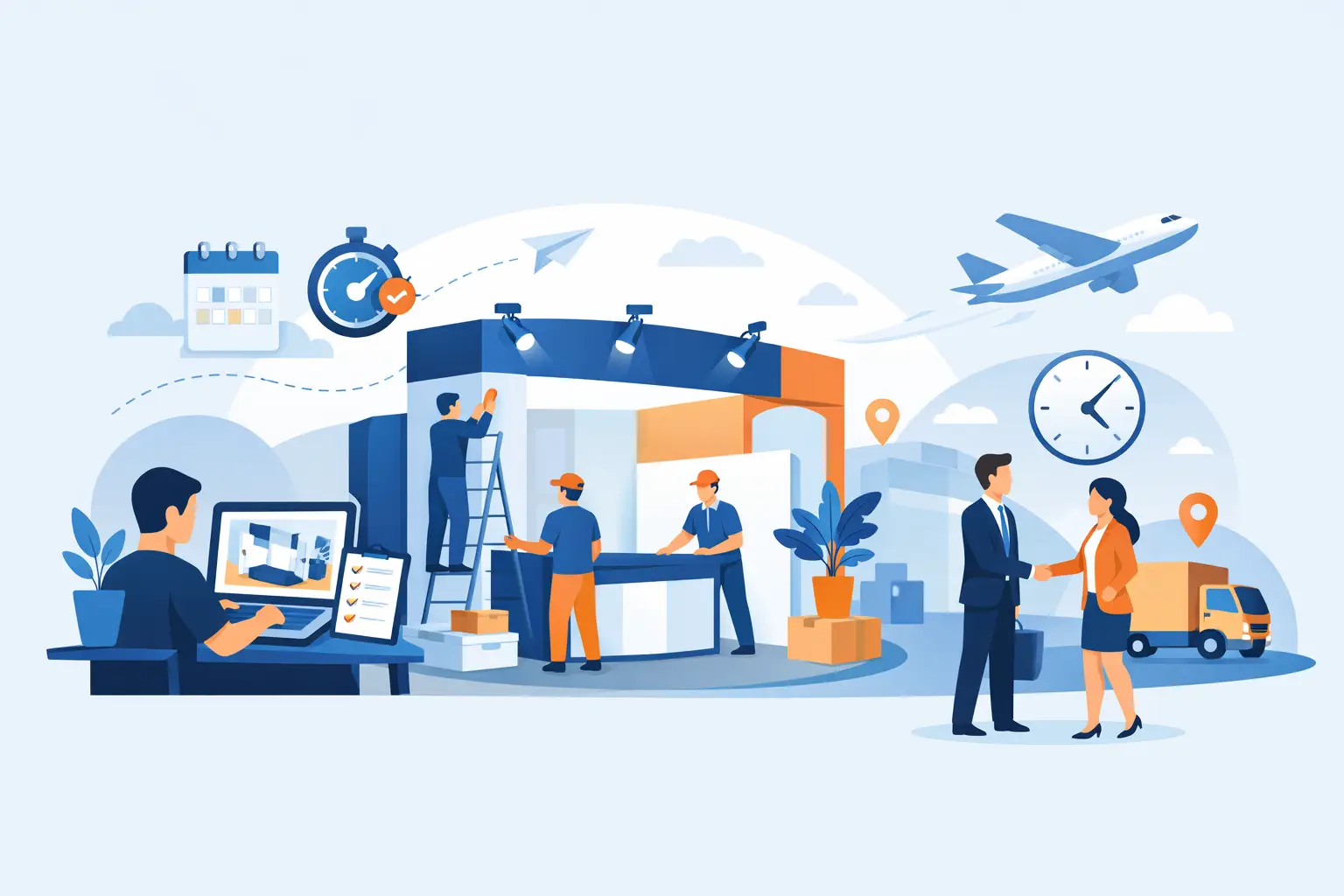

A missed print file, the wrong booth size, or a late approval can turn a good event plan into a rushed fix. If you are figuring out how to order exhibition booth assets for a trade show, expo, campus event, or corporate activation, the process works best when you treat it like a branded procurement project, not a last-minute purchase.
An exhibition booth is not a single item. It usually combines structure, printed graphics, counters, backdrops, branded surfaces, lighting, and sometimes supporting materials such as flyers, giveaways, table covers, standees, and digital displays. That is why ordering well starts with clarity. The more precise your brief, the easier it is to get a booth that fits your space, your timeline, and your brand standards.
How to order exhibition booth the right way
The first step is defining what the booth needs to do. Some companies need a clean branded presence for visibility. Others need lead capture space, product display zones, storage, or a meeting point for sales teams. Those are very different requirements, and they affect size, layout, print areas, and accessories.
Before requesting pricing or production, confirm the event details. You need the booth dimensions provided by the organizer, venue rules, setup and breakdown timing, and whether power access, screens, furniture, or rigging are allowed. A supplier can produce the booth correctly only when those basics are clear.
It also helps to decide whether this is a one-time installation or a reusable display system. A custom booth for a major launch may justify a more tailored build. A portable booth for repeated use across multiple events usually benefits from modular components and durable printed panels that can be refreshed later.
Start with the booth format, not just the design
Many buyers begin with artwork ideas. In practice, format comes first. The design has to fit the physical system you are ordering.
A simple pop-up backdrop works for compact event footprints and fast setup. Modular exhibition booths suit businesses that want more structure without rebuilding from scratch every time. Larger custom booths are better when the event has high traffic, premium positioning, or product demonstration needs.
The trade-off is straightforward. Simpler systems are easier to transport, store, and reorder. Larger custom builds give you more impact and better zoning, but they require tighter planning, stronger artwork coordination, and a bigger budget. There is no universal best option. The right choice depends on how often you exhibit, how much floor space you have, and what your team needs the booth to accomplish.
What your supplier needs before quoting
If you want an accurate proposal, avoid sending only a logo and a line that says, “We need a booth.” A serious order starts with a usable brief.
Your supplier should receive the booth size, event date, venue location, target completion date, branding guidelines, artwork files if available, quantity of booth elements, and any extras you need such as counters, brochure holders, branded tables, display shelves, or promotional merchandise. If you are ordering for a conference or expo in Dubai, include the venue rules early because access windows and installation requirements can affect production and delivery timing.
You should also mention whether your brand team requires visual mockups before approval. That one detail matters because approval cycles often cause more delay than printing or fabrication.
Budget planning: what changes the price
Exhibition booth pricing is rarely based on square footage alone. The material type, print method, finish, complexity of structure, and installation requirements all influence cost.
A straightforward printed backdrop with one counter is naturally cheaper than a booth with layered walls, integrated shelves, lighting, and custom-built features. Reusable systems can cost more upfront but save money over multiple events. Single-use setups may look economical at first, but repeated reordering can make them more expensive over time.
This is also where bundling matters. If you need the booth plus branded giveaways, roll-up banners, flyers, folders, lanyards, or staff apparel, consolidating with one supplier can reduce coordination issues and help keep visuals consistent across every item. For business buyers, that convenience is not a small detail. It affects timelines, approvals, and accountability.
Artwork and branding: where orders often go wrong
Most booth delays happen after the quote is approved. The problem is usually artwork.
Booth graphics need correct dimensions, print-ready files, and clear placement of logos, messages, product visuals, and contact details. A design that looks fine on a laptop screen may fail on a large-format backdrop if the resolution is low or the text placement ignores seams, folds, or hardware coverage.
That is why artwork should be reviewed in context of the booth structure. Ask for a visual layout that shows how graphics map to each panel or section. This is especially important for modular systems, curved displays, and counters where visible areas may be smaller than the overall print size.
Keep messaging tight. Exhibition visitors do not stand still and read paragraphs. Your booth should communicate who you are, what you offer, and what action you want people to take within seconds. If your booth is also part of a larger campaign, align it with the same brand language used across brochures, flyers, and promotional items.
Approvals should be centralized
A booth order gets complicated fast when marketing, procurement, and event teams all approve different parts separately. One person should own the final sign-off. Without that, version confusion can slow the project and create expensive reprints.
A clean approval process usually looks like this: confirm the booth format, approve the quotation, review the visual mockup, approve final artwork, then lock production. If changes are still happening after print approval, your event date is already under pressure.
Production timelines: order earlier than you think
If you are asking how to order exhibition booth materials efficiently, the short answer is this: earlier is better. Not because suppliers want extra time, but because exhibition projects often include multiple production stages.
There may be design adaptation, artwork checks, material sourcing, print output, finishing, fabrication, packing, delivery, and installation. If your booth includes extras such as counters, branded furniture wraps, floor graphics, event kits, or supporting merchandise, each item may have its own lead time.
Rush orders are possible in some cases, especially for simple printed systems. But speed reduces flexibility. You may have fewer material options, tighter revision windows, and higher risk if event details change. Ordering early gives you room to correct errors before they become expensive.
Don’t order the booth in isolation
An exhibition booth does not carry the full event presence on its own. Buyers often focus so much on the structure that they forget the supporting assets visitors actually take away or interact with.
If you are placing a booth order, this is the right time to review related items: branded table covers, brochures, folders, catalogs, business cards, name badges, lanyards, uniforms, giveaway items, and signage. Ordering these together helps avoid a common problem – a polished booth paired with mismatched printed materials or low-visibility handouts.
This is where a one-stop supplier adds practical value. Instead of coordinating separate vendors for booth fabrication, printing, and branded merchandise, you can manage one visual direction and one production workflow. For procurement teams and event managers, that saves time and reduces follow-up.
Questions to ask before you place the order
Before final confirmation, ask what is included in the quote. Some suppliers price only production, while others include delivery, setup, dismantling, and packing. You should also ask whether the booth is reusable, how it should be stored, and whether replacement graphics can be ordered later without rebuilding the full unit.
It is smart to confirm material durability, cleaning requirements, and what happens if the venue has strict install timing. If your team travels frequently for events, portability matters more than it might seem during the initial buying stage.
You should also ask for a realistic production timeline, not just the fastest possible one. A practical timeline is more useful than an optimistic promise that leaves no room for file corrections or organizer changes.
After the order: prepare for execution
Once the booth is approved and in production, create a simple event checklist. Confirm contact persons for delivery and setup, venue access timing, artwork approval records, and any items that will ship separately. If promotional products or printed handouts are part of the same event, verify quantities and packaging before dispatch.
Even a well-produced booth can underperform if setup is disorganized or key materials arrive in different batches without clear ownership. Good execution is part of the order process, not something that starts on event day.
For companies that exhibit more than once a year, it is worth documenting what worked and what did not. That makes your next order faster, more accurate, and often more cost-effective.
A booth should make your brand easier to notice, easier to understand, and easier to trust. When you order with clear specifications, realistic timing, and all supporting materials in view, the booth becomes more than a display – it becomes a working part of your sales and brand presence.